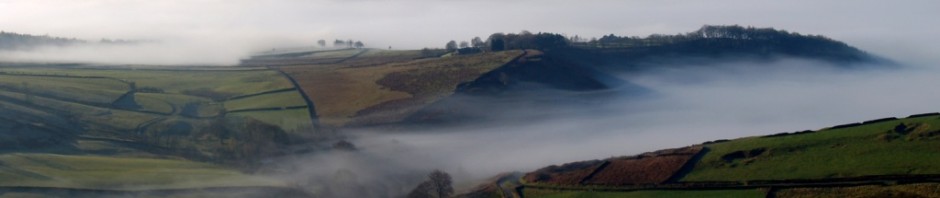
[I read this 1980 novella in two sections, so I could gather my thoughts at the half-way point. I wrote about the first half before reading the rest. Spoiler alert: If you read this running commentary, you will find out everything that happens in the book.]
21 June 2024
The first half
I first read this book shortly after it was first published, and remember liking it. Do I like it as much this time? In its setting and pastoral descriptions, it could almost have been written decades before 1980. Almost, but not quite. We’re wary of the pastoral idyll that Birkin, the first-person narrator, hopes he has found. He knows that what seems such a summertime escape for him is nothing at all like that for those living there. Part of its allure for him is that this is a long-established community, with a life going back not only generations, but centuries. This is the ground the little church he’s working in was built on, and the people who commissioned the extraordinary wall-painting he’s restoring were the ancestors of those living here now.
J L Carr fits a lot into such a short work of fiction. Part of the cleverness of this first half is that it doesn’t feel cramped. Birkin keeps himself to himself at first, having little contact with the locals after his first arrival. He must buy some basic provisions somewhere—he’s camped in the church belfry when he isn’t working—but Carr doesn’t show us that. Aside from the sexton, Mossop, almost the only people he talks to at first are other outsiders. The vicar—I’ll come back to him—and Moon, another war veteran working on an archaeological project just outside the churchyard. The war they are recovering from—recovery is a big theme—is the Great War. It’s left Birkin with an appalling twitch that people pretend not to notice, and the other man with fragments of shrapnel in him that probably aren’t all literal.
But Carr needs to get a shift on, and luckily Birkin’s first arrival had introduced him to a few locals. The stationmaster and his family are the first to welcome him in—which doesn’t begin to describe the way they almost immediately absorb him into their lives. He’s suddenly an umpire for the cricket team, a helper at the Sunday school of the Wesleyan Chapel (definitely not ‘church’), and having Sunday dinner with them. Kathy, the young daughter, likes to talk to him as he works. She’s useful both for Carr and for Birkin, a talkative two-way conduit for news. Two-way, because as well as letting him in on how village life operates, she tells him how much the locals like him. The reader realises how he makes this easy for them, how much he wants to fit in. He’s a southerner in this North Yorkshire village, but the locals don’t let that get in the way. And they seem to get it that while he isn’t Chapel, he’s no more ‘church’ than they are. He’s doing a job, that’s all.
Not that we’re invited to speculate on them. This is Birkin’s story, and Carr is happy for the village residents to be little more than thumbnails—it’s one of the perils of short-form fiction. But they do the job of giving Birkin his first real taste of any sort of peace since the war ended nearly two years before. He has a wife, but the marriage seems to be at an end. Maybe ‘Vinny’ is dead. He starts to think about stretching out his sojourn there from July, when he arrives, well into the autumn. Three weeks into his project, Kathy tells him he ought to think about staying. Which he knows will never happen, despite his wistfully musing on the idea.
An idyll, but not an idyll. By the time Carr was writing, there was already an established practice of writers bringing a modern sensibility to the lives of people living in the past. In John Fowles’s The French Lieutenant’s Woman and J G Farrell’s The Siege of Krishnapur the reader is invited, implicitly or explicitly, to consider how strange people’s lives used to be. In both of them, some of the situations verge on satire. Those Victorians, eh? Carr doesn’t do that, but he has his narrator, many years in the future as he writes, contemplating the isolation of a village in 1920 that could hardly be imagined in the late 20th Century. My dear, the dialect! (Carr has his narrator imitate it, Bronte-like, but only once. I don’t know why he thinks it’s necessary.)
Birkin and Moon are working on a rich local woman’s postmortem fancies, to uncover an unlikely masterpiece in the church and find an ancestor’s grave in the unconsecrated ground nearby. The work adds to their outsider status, so Birkin does well to overcome it. We are persuaded, I suppose, that, basically, he’s a good bloke. He compares the ‘Doom’, the Day of Judgment he’s uncovering, with others we might have heard of, and it’s far better. He tells us—or whoever it is that he’s telling—that the artist, who he feels a kinship with, could have taught the Italians a thing or two about real humanity. Well, maybe—it tells us at least as much about Birkin as about this anonymous 14th Century artist. Meanwhile, Moon is the man digging down—not to find the grave, whose location he’s worked out already, but to do some Saxon archaeology of his own—and he comments on Birkin’s work high up. The two men, both damaged, are friendly to each other, but neither of them is looking for closeness. And maybe Moon’s downward gaze is symbolic. He keeps the residents at arm’s length, and they are more discouraged by this than by his RP accent.
But even he can’t miss the beauty of Alice, the frosty vicar’s young wife, and he and Birkin agree about how impressed they are by her. More than that. After their first encounter, in the church, Birkin can’t help thinking both about the unlikeliness of the marriage—how on earth did that happen?—and the joy of sexual ecstasy marriage brings. We still don’t know what happened to Birkin’s wife, but whatever it is can’t stop a man dreaming….
That reference to sex is knowingly late 20th Century. It comes as a surprise in this straitlaced world, and immediately feels like a Chekhovian loaded gun. Birkin visits the vicarage to ask for the first of his payments—the vicar is late with it, and Birkin knows this is deliberate—and is surprised at the almost deranged vehemence of the wife’s sense of loneliness and isolation. As soon as he arrives, she tells him about the nightmares she has, of the overgrown trees surrounding the house closing in on her. He’s surprised, because out in the world she seems confident, comfortable in her sense of herself.
The gun feels cocked and ready now. A month in the Country? Is something going to happen to cut short his hoped-for long stay and send him away with his work unfinished? Will the unfeasibly marvellous Doom he’s uncovering be covered over again, even destroyed, by a cuckolded vicar with barely suppressed anger management issues? Or is there really no cocked gun at all, so that Birkin will be able to find some kind of closure? PTSD and a marriage ended is a lot for a man to cope with, and maybe a lovely rural retreat—no more than that—will be just the ticket.
The second half
Hmm. Carr decides to go for a bittersweet mood, which I don’t think is adequate after he’s set so many viscerally urgent themes going. And… other things. There’s nothing either particularly real or particularly moving in this book. At the start, Carr manages to raise what could have been standard historical fare into something potentially much more involving. A tired, damaged soldier arrives at the kind of railway station that disappeared long ago, and period details provide a plausible mise-en-scene for something interesting to happen. Given Birkin’s back-story, he ought to come over as traumatised, half-destroyed man. He isn’t. His voice is frank, not lacking in confidence, and he knows what he likes in the village he’s landed in. By the end, somebody—is it Alice or Kathy?—lets him know his twitch is far less noticeable now. He’s had a restorative summer although, yes, he is left feeling vaguely disappointed about his failure to rescue both Alice and himself from unhappy lives. But it doesn’t feel tragic, because Carr isn’t aiming for anything so substantial. What we get instead is wistful regret, with a strong helping of rural nostalgia. It’s nowhere near enough.
A better writer, given the ingredients Carr provides for himself, would have managed something far more moving, or at least involving. Carr is a miniaturist. He famously liked small, pocket-sized books, and small, pocket-sized subjects to fit them. Ecclesiastical architecture? Check. The lost world of a strict Nonconformist community (something Carr himself knew all about, having been brought up in one himself)? Check. Rural life in 1920? Check—except in this village there isn’t a single grieving family, never mind a community eviscerated by the losses of a futile war. In other words, this isn’t reality, but a backdrop for an imaginary remembered moment of nostalgia and regret. In a picturesque setting the National Trust would be proud to claim for itself.
OK, an author should write about what he knows—but it doesn’t help Carr when he writes about what he doesn’t know. His traumatised narrator writes too easily, too glibly, about the charms of the village and the lovable foibles of its inhabitants. And he isn’t going to set any boats rocking. Near the end, as Birkin is clearing away his belongings, Alice could not make it any clearer than she does that she wants him. But he’s having none of it. Carr has him pretending that he’s taken aback, unprepared. But really, it simply doesn’t fit Carr’s brief. He wants the wistful, the vaguely regretful, the road not taken and the boat unrocked.
Which leaves him, Carr, with a problem. It’s been clear from the start that Birkin’s marriage is essentially over. Vinny is serially unfaithful to him, presumably having developed the habit while he was away at war. But, it seems, that’s OK. He can go back, they can sort something out. As in Turgenev’s play, from which Carr took his somewhat misleading title, everybody can return to their former, somewhat unsatisfactory lives. But at least Birkin has been able to have a nice break. And… what? Carr has taken an idea for a walk, and he’s got to the end of it. All that’s needed now are a few lines to wrap it all up nicely.
‘So, in memory, it stays as I left it, a sealed room furnished by the past, airless, still, ink long dry on a put-down pen. / But this was something I knew nothing of as I closed the gate and set off across the meadow.’ We’re in a meadow, we’re in the writer’s room, we’re… ready for a nice piece of cake in the tea-room, probably.
 We can read it for you wholesale